
Meet the Team
Meet the leaders whose collaborative efforts in research and engineering established the THOR infrastructure.

Dr. Kudithipudi is a computer engineer and scientist with a passion for revolutionizing AI through brain-inspired computing. Currently serving as the founding director of the MATRIX AI Consortium for Human Well-Being at the University of Texas at San Antonio, Dr. Kudithipudi leads a dynamic team of 85+ researchers committed to addressing some of the world's most challenging issues in AI. Dr. Kudithipudi is a renowned expert in Neuro-inspired AI and neuromorphic computing, with 20 years of experience. With a substantial $37.61 Million portfolio of research, she is leading national AI initiatives, including the NSF AI Partner Institute, The Neuromorphic Commons, co-PI on AFOSR and DOE centers, and leading partnership with NIH AIM-AHEAD. A strong advocate for advancing AI R&D, Dr. Kudithipudi collaborates with federal scientific and policy leaders to develop national roadmaps for AI, microelectronics, and chip-design research. She contributed to a bipartisan U.S. policy white paper on AI R&D investment and regularly shares her expertise as a speaker in Capitol Hill AI roundtable discussions. She also advises AI startups as a consultant. She has been recognized as the Rochester Technology Woman of the Year in 2018, Clare Boothe Luce Fellow for Women in Higher Education, and 2022 San Antonio Lights Award. In her spare time, she enjoys hiking with family.
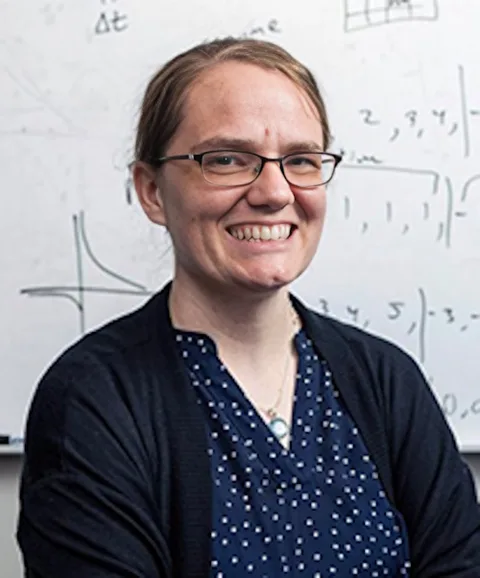
Catherine (Katie) Schuman is an Assistant Professor in the Department of Electrical Engineering and Computer Science at the University of Tennessee (UT). She received her Ph.D. in Computer Science from UT in 2015, where she completed her dissertation on the use of evolutionary algorithms to train spiking neural networks for neuromorphic systems. Katie previously served as a research scientist at Oak Ridge National Laboratory, where her research focused on algorithms and applications of neuromorphic systems. Katie co-leads the TENNLab Neuromorphic Computing Research Group at UT. She has over 100 publications as well as seven patents in the field of neuromorphic computing. She received the Department of Energy Early Career Award in 2019.
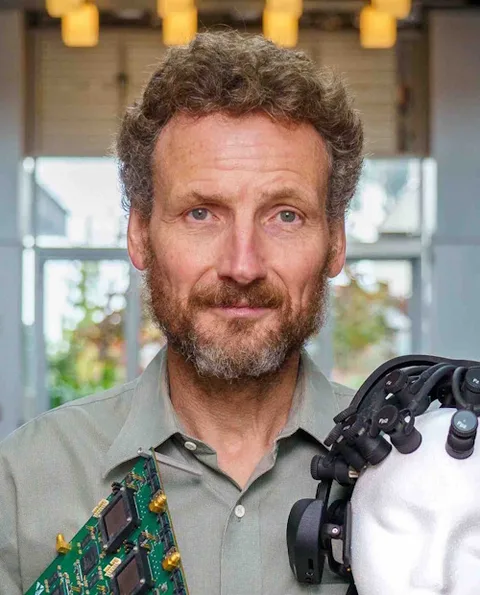
Gert Cauwenberghs is a Distinguished Professor of Bioengineering and Co-Director of the Institute for Neural Computation at UC San Diego. He holds a Ph.D. in Electrical Engineering from Caltech and was previously a professor at Johns Hopkins University. He is a pioneer in neuromorphic engineering, specializing in the design of highly energy-efficient, massively parallel integrated circuits that emulate the computational brain. His research focuses on micropower biomedical circuits, neuron-silicon and brain-machine interfaces, and adaptive intelligent systems for applications like autonomous robots and wearable health monitoring. He is a Fellow of the IEEE and AIMBE, and co-founded Cognionics Inc.
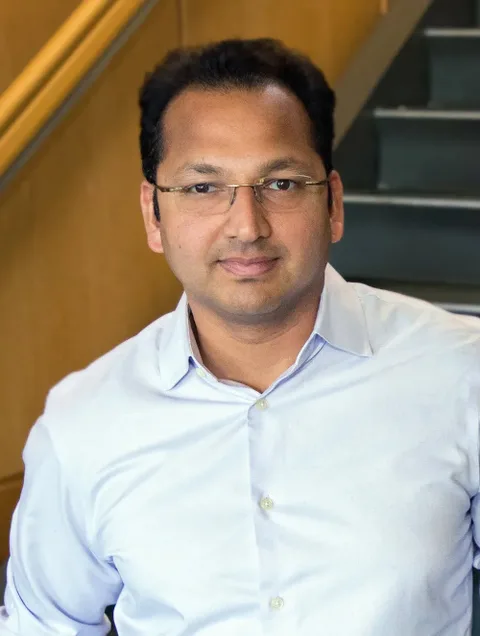
Vijay Janapa Reddi is an Associate Professor at Harvard University specializing in computer architecture, machine learning, and runtime software. His research develops computing systems for edge, mobile, and IoT devices to improve performance and energy efficiency. He is a VP and founding member of MLCommons, a nonprofit dedicated to accelerating AI innovation, and was the driving force behind the MLPerf Inference benchmark. He holds a Ph.D. in computer science from Harvard and is passionate about STEM education, notably through the free TinyML massive open online course (MOOC).

Tej Pandit is the Lead Engineer for the THOR project, responsible for the deployment, maintenance, and optimization of the neuromorphic hardware infrastructure at UTSA. Tej works as an AI Research Scientist at the MATRIX AI Consortium and a Ph.D. graduate (Electrical Engineering) from the University of Texas at San Antonio (UTSA), where he was advised by Dr. Dhireesha Kudithipudi. He earned his M.S. in Computer Engineering from the Rochester Institute of Technology (RIT). His research is concentrated on developing Continual Learning AI and Reinforcement Learning systems, drawing inspiration from neuromorphic systems. He explores how neurogenerative evolutionary mechanisms and cellular automata can be used to create AI capable of lifelong learning without suffering catastrophic interference.
Community Leaders
The community leaders who foster collaboration, provide support, and drive the growth of the THOR community.
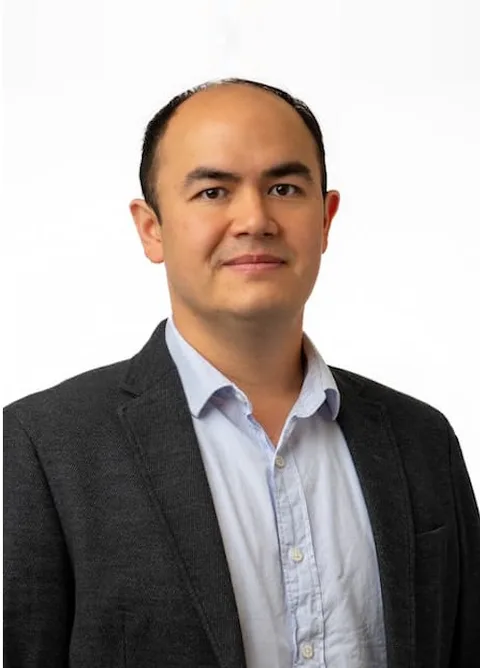
William Severa is a mathematician and researcher specializing in deep learning, spiking neural networks (SNNs), and neuromorphic computing at the University of Texas at San Antonio (UTSA). Holding a Ph.D. in mathematics, his research focuses on the practical application of neural networks and exploring neuromorphic systems as event-based, parallel processors to improve energy efficiency for low-power applications.

Suma George Cardwell is a Principal Member of Technical Staff in the Center for Computing Research at Sandia National Laboratories. She holds a Ph.D. in Electrical and Computer Engineering from Georgia Tech and has over a decade of experience in neuromorphic computing, including IC design. Her research focuses on event-based processing, hardware/algorithm co-design, and applying heterogeneous systems from HPC to the edge. She also has industry experience from roles at Mavric Semiconductor and Blackberry.
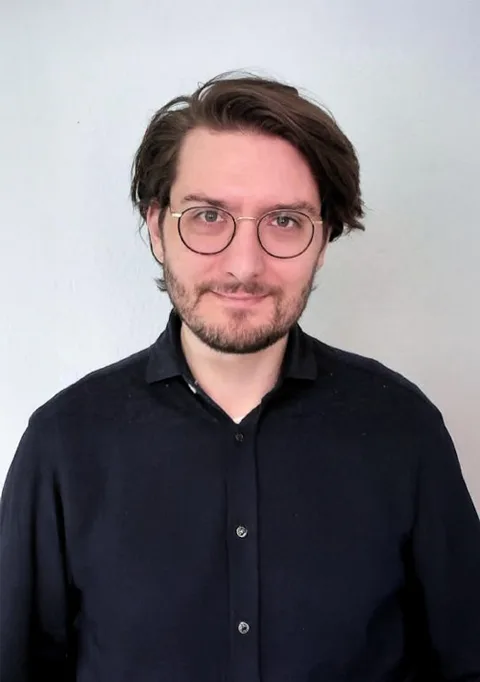
Jens Pedersen is a doctoral student in neurocomputing specializing in spiking neural networks (SNNs) and robotics, supervised by Jörg Conradt. He earned his master's degree from the University of Copenhagen in 2019, where he focused on modeling learning systems in SNNs and artificial neural networks. His prior work includes exploring simulations of rudimentary cognitive processes and researching improved formalisms for SNNs at the Kirchhoff Institute for Physics in Heidelberg, Germany.
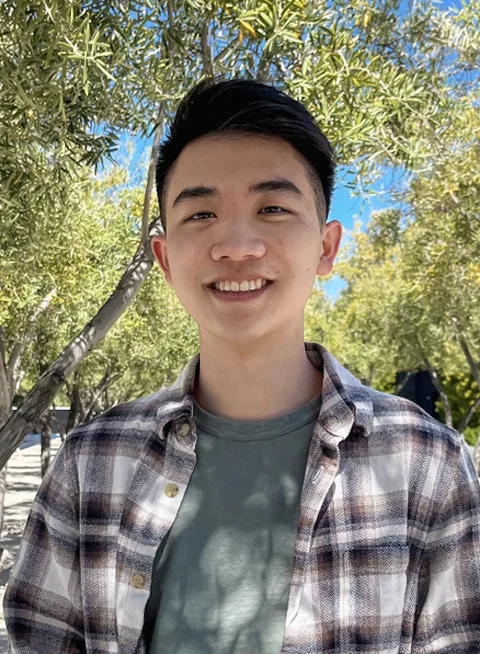
Jason Yik is a Ph.D. graduate fellow at SEAS (USC B.S. in computer engineering), advised by Vijay Janapa Reddi. His research in neuromorphic computing focuses on designing brain-inspired AI systems that are co-designed in hardware and software to achieve superior energy efficiency. His prior work involved creating benchmark frameworks and optimizing neuromorphic hardware performance.

Dr. Joe Hays is a Research Scientist at the U.S. Naval Research Laboratory (NRL), focusing on advancing Edge Intelligence capabilities for robotic systems. His work centers on neuromorphic processing, low-power AI accelerators, event-based sensing, and developing spiking neural network algorithms. Before joining NRL in 2011, Dr. Hays was a senior engineering manager at National Instruments, where he led software development for dynamical system hardware-in-the-loop (HIL) simulation and real-time embedded computing.
Student Researchers
The students that support and help build the THOR ecosystem.

Gwen is currently completing her PhD in Electrical Engineering at the University of California San Diego, after having obtained her bachelor's degree in Electrical Engineering at the University of Illinois Urbana-Champaign where she worked on research exploring the neural correlates of emotional processing. Her current research interests include FPGA based neuromorphic hardware as well as optimizing the employment of blind source separation algorithms for EEG data. When not in the lab, Gwen spends her time supporting increased funding for research and education and promoting opportunities that strengthen academic and scientific advancement.
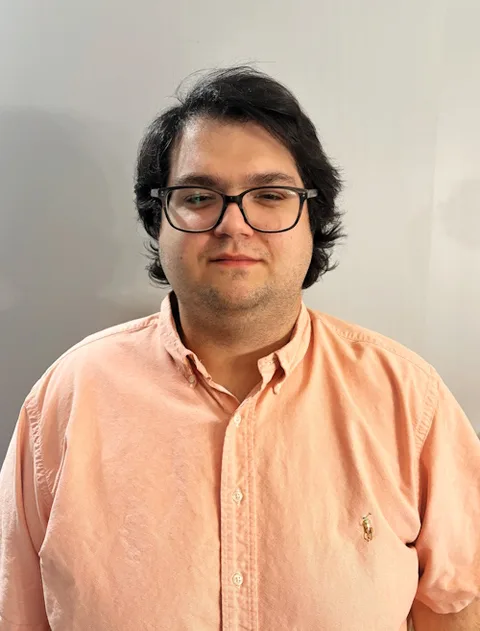
Ian Mulet is a 4th year PhD student under Catherine Schuman at University of Tennessee Knoxville. His focus is algorithm design for Neuromorphic Applications, with other areas of interest being co-design and large scale Neuromorphic deployment.
Scientific Advisory Board
The advisory committee, that helps steer the direction of THOR and maintain the vision of the project.
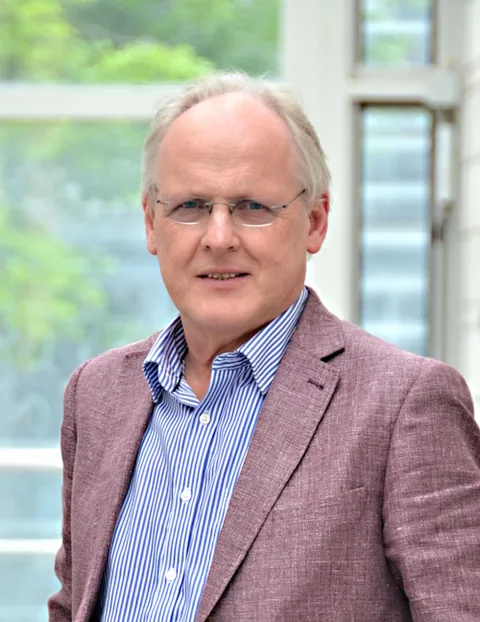
Steve Furber (CBE) is the ICL Professor of Computer Engineering in the School of Computer Science at the University of Manchester, where he has worked since 1990. He is widely accepted as a pioneer in the global computing revolution, best known for his work at Acorn Computers Ltd. where he was a principal designer of the BBC Microcomputer and, crucially, the ARM 32-bit RISC microprocessor. The ARM processor architecture is now the world's leading embedded processor core, powering most of the world's mobile and consumer electronics. Currently, he leads the SpiNNaker Project, a massively-parallel, million-core computer that mimics the structure and real-time workings of the human brain to advance research in computational neuroscience and novel computing architectures.
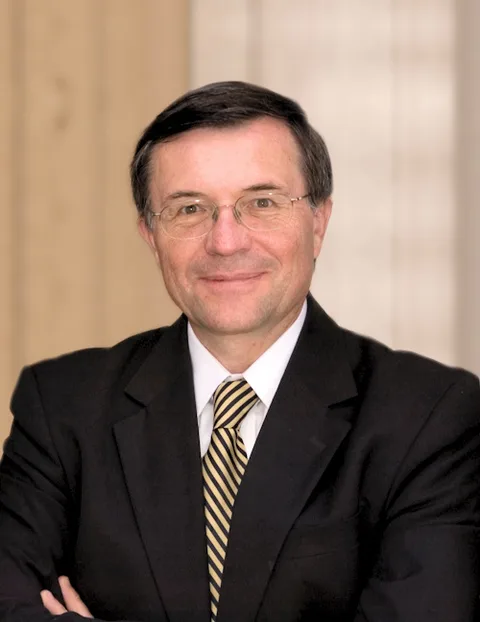
Terrence J. Sejnowski is a pioneering American computational neuroscientist and biologist, widely recognized for his foundational contributions to the fields of neural networks and computational neuroscience. He is currently the Francis Crick Professor at the Salk Institute for Biological Studies and a Distinguished Professor of Neurobiology at UC San Diego. With a Ph.D. in Physics from Princeton University, Sejnowski's research bridges the gap between brain science and machine learning. His key achievements include the co-invention of the Boltzmann machine, a fundamental learning algorithm for multilayer neural networks that laid the groundwork for deep learning, and the development of Independent Component Analysis (ICA), a universally used technique for analyzing brain imaging data like EEG and fMRI. He is a member of all four US National Academies (Sciences, Engineering, Medicine, and Inventors) and is the President of the Neural Information Processing Systems (NeurIPS) Foundation.

Craig Vineyard is a computer engineer (PhD) with over 15 years of experience at Sandia National Laboratories, where he leads computing research and development for national security. His expertise lies in machine learning and neuromorphic computing. He conducts foundational research to understand how advanced computing technologies can impact a range of applications, including scientific computing and remote sensing. His research contributions cover machine learning algorithm analysis, neuromorphic computing architectures, computer architecture analysis, game theory, and information theoretic analysis.
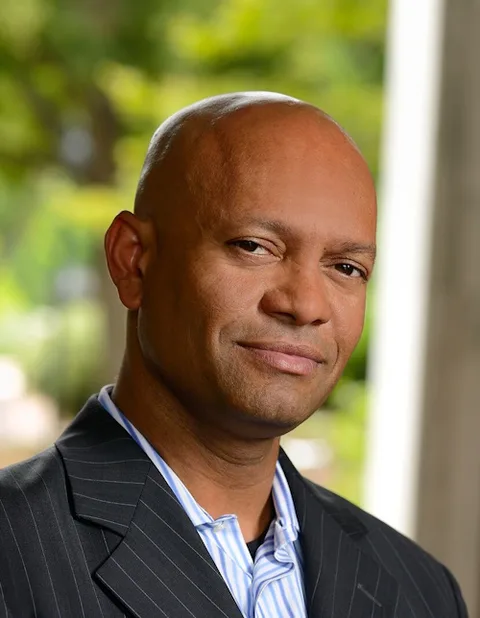
Ralph Etienne-Cummings is the Julian S. Smith Professor of electrical and computer engineering and Vice Provost for Faculty Affairs at Johns Hopkins University. A pioneer in mobile robotics and legged locomotion for the past three decades, his work focuses on biologically inspired, low-power processing, biomorphic robots, and advanced neural prosthetics.
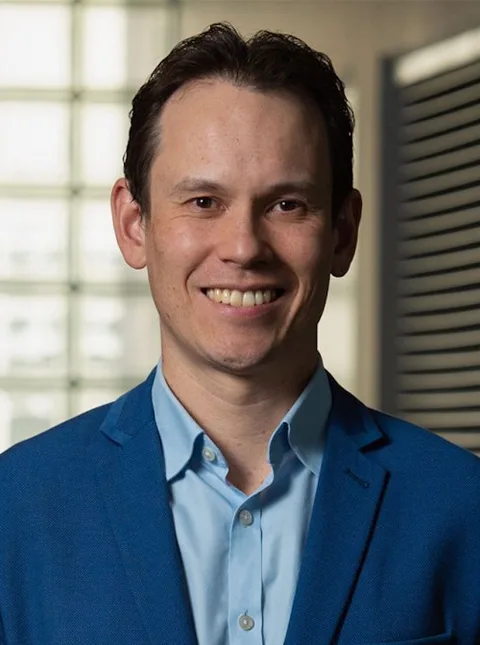
Michael Milford is an Australian Research Council Laureate Fellow and Director of the QUT Centre for Robotics. His interdisciplinary research in robotics, neuroscience, and computer vision focuses on modeling the brain for tasks like navigation to create technologies such as all-weather positioning for autonomous vehicles. As a multi-award winning educational entrepreneur, he is also dedicated to public education on robotics, AI, and autonomous vehicles. He is a QUT Professor, Microsoft Research Faculty Fellow, and a Fellow of the Australian Academy of Technology and Engineering.
Industry Council
